


While many individuals explore their identities during childhood, I navigated a world that wasn’t inherently tailored to my unique design. Life imparted its lessons earlier on. Before I grasped concepts such as careers, leadership, and success, I was cultivating patience, adaptability, faith, and an understanding that progress isn’t always immediately apparent. At the time, I couldn’t comprehend why certain paths seemed more challenging than others. Now, I realize that God was already structuring out my foundation long before I could envision the structures that would eventually emerge.
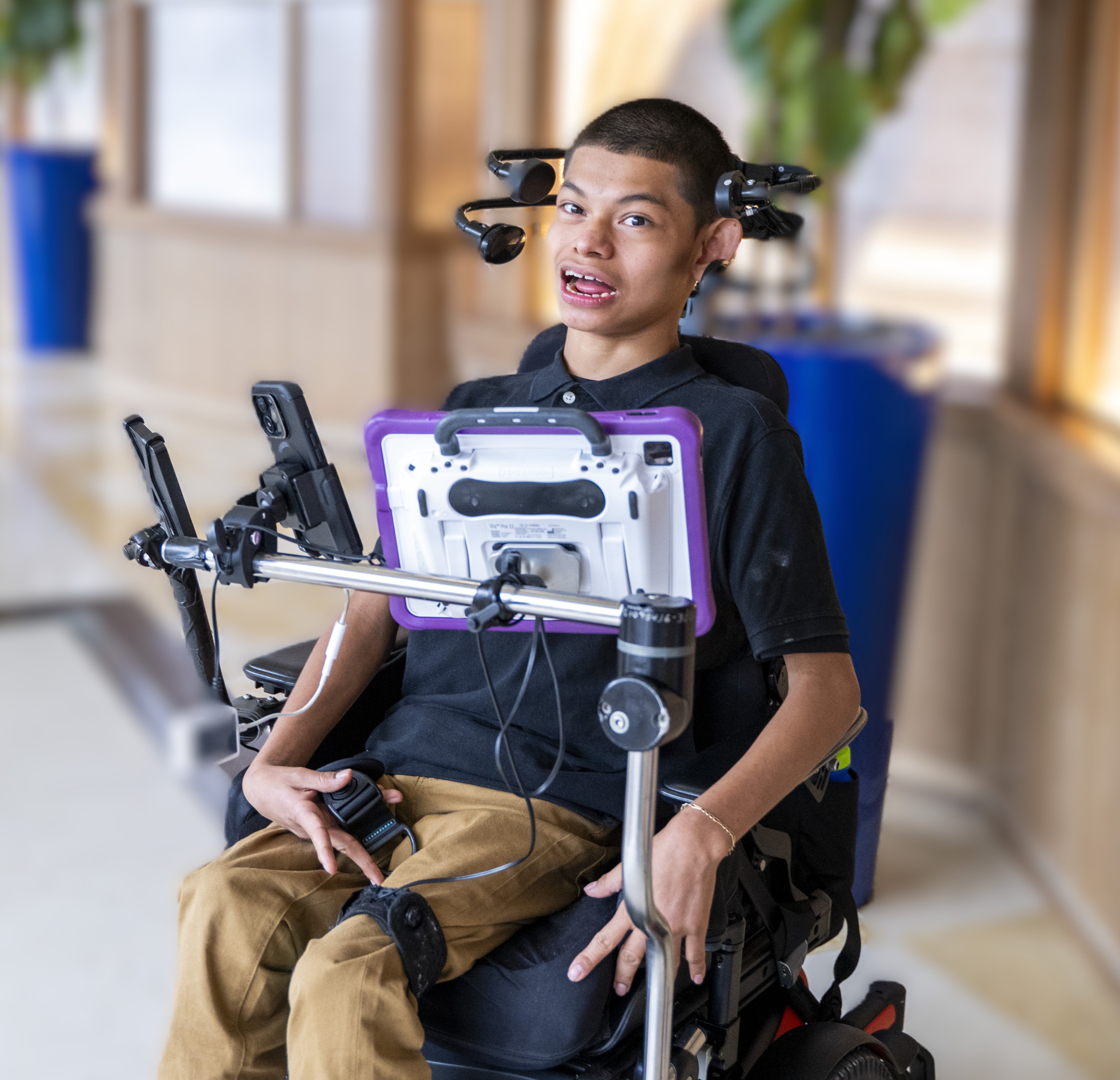
My name is Omar Covarrubias Juárez, serving as a PRC-Saltillo Ambassador in Miami, Florida. I was born in 2007 to a proud Mexican family as the youngest of four brothers. From the moment of my birth, life manifested a unique blueprint for me; I was diagnosed with dyskinetic cerebral palsy. I rely on assistance for walking and communicate through alternative compromises, as my natural voice and movements are often challenging. For some individuals, it is the initial thing they observe. For me, it merely marked the beginning of a far more extensive narrative.
Growing up, I learned that life rarely rewards excuses. One phrase followed me through every chapter: Poniendo esfuerzo, todito se puede hacer. This translates to “With effort, anything can be achieved.” Another principle stayed right beside it: hacer las cosas bien, meaning “do things well.” It taught me that meaningful progress is created through each decision. Sometimes, progress happens quickly; other times, it seems to pause temporarily. Either way, you continue building.
Communication became one of the first things I learned to build. My AAC journey began with simple systems, patience, trial and error, and a great deal of persistence. What started as access eventually became independence. What began as support eventually transformed into leadership. What started as communication evolved into an opportunity. Somewhere along the way, the dynamics of the relationship shifted. Language stopped being assigned to me—language became mine. Communication turned into construction rather than permission.
Communication is not something we inherit or assign. It is something we intentionally construct, refine through experience, and strengthen through thoughtful design. When done correctly, it becomes a powerful tool for independence, identity, and connection. By expanding communication through intentional design, we redefine its potential. Limitations become structural rather than personal. Communication becomes creation, creation becomes identity.
Today, I communicate using an Accent 1000 paired with a NuPointer/head pointer, alongside an iPhone operated through Apple’s Gliding Cursor, triggered by a leg-button switch. To some people, they are pieces of technology. To me, they are proof that innovation reaches its highest value when it creates access. The world saw an AAC device. I saw a personal identity. The voice may be digital, however, its impact is real.
My educational journey, spanning from Pre-K to high school graduation, resembled an unending episode of “Survivor: Classroom Edition.” While school focused on academic subjects, life presented perspectives akin to complementary samples. School projects were my competitors, while life responsibilities were my compensations. Grades were the currency of school, but in life, growth emerged as the true gold standard. After eighteen years in what I affectionately refer to as the “life jail of school,” I’ve realized that the most invaluable lessons often aren’t shown within a curriculum.
Life has a wicked sense of humor, doesn’t it? The student who once plotted their great escape from school now finds themselves standing at the front of the class, ready to mentor the next generation of SLP’s and consultants. Talk about AAC user justice! Somewhere during elementary, middle, and high school, with seven paraprofessionals and an AAC system that evolved alongside me, I learned to advocate for myself, communicate in unfamiliar rooms, and contribute to conversations larger than myself. Life taught me that being different is not a disadvantage when paired with determination.
As my communication skills expanded, so did my ambitions. What began as learning how to express myself evolved into leadership, public speaking, advocacy, mentorship, and representing the AAC community through PRC-Saltillo. Every presentation reinforced something I believe: communication is not defined by how a voice sounds. The value of the ideas behind it defines it.
Years of delinquent skills placed me in access rooms I once only imagined, with a key experience being attending and presenting at ATIA 2026, a leading conference focused on assistive technology, accessibility, and innovation. Walking into ATIA felt like entering a future I had prepared for, working alongside those shaping accessibility. There, I built meaningful connections rooted in responsibility and shared vision, expanding my understanding of AAC, AI, and human-centered design. I attended to participate and contribute, not just observe, leaving grateful and energized. ATIA confirmed my voice belonged there all along.
The attainment existed co-presenting with Kirk Behnke on AI and AAC, sharing a guiding principle: architecture depends on blueprints, communication depends on structure, and technology reaches its highest potential when it strengthens human capability rather than replacing it. Innovation should amplify, not devastate them. We don’t just create voices—we create futures.
Before architecture became my chosen field of study, I saw it as my ultimate problem-solving. Every challenge presented itself as a design puzzle, each obstacle a structural imperfection waiting for a solution, and every opportunity a blank canvas just waiting to be crammed. As I delved deeper into the world of architecture, it gradually became an inseparable part of how I see and understand the world. A lyric perfectly captures this vision: Solo hay que ser pacientes y un tanto inteligentes; en mis sueños he sido el arquitecto. (You just have to be patient and somewhat intelligent; in my dreams, I have been the architect.) The dream has transcended its abstract nature, gaining a clear direction.
In May of 2026, I graduated high school. For multiple students, graduation marks the end of a chapter. Accordingly, as anticipated it felt like ownership and FREEDOM. I thought graduation was the goal. It turns out, graduation began the deserve FREEDOM!! The FREEDOM to structure my own independence, advocacy, and designing more of my own future. After eighteen years of following schedules largely created by others, I finally stepped into a chapter where the blueprint increasingly belongs to me.
That FREEDOM quickly expanded through Miami Dade College. This experience exposed me to a more advanced academic environment that emphasized independence, accountability, and scale. MDC represents expansion—broader frameworks, elevated expectations, stronger foundations. Education stopped feeling theoretical. Learning became connected to real opportunities, real goals, and real responsibility. Ironically, after spending years trying to leave school behind, I finally discovered an educational environment that feels connected to real life.
Ando cumpliendo sueños porque nunca me rajé, dicen que es fácil, pero no todo lo ven. (I’m fulfilling dreams because I never splintered, they say it's easy, but they don't see everything.) People see the presentation, the conference, the diploma, the ambassador title, or the achievement. What they do not always see are the years behind those moments. The days when progress could only be measured in inches instead of miles. Those invisible days built everything visible today.
I remain deeply grateful to the people who invested their belief, encouragement, patience, and trust in my journey. They know who they are, and their fingerprints can be found throughout every chapter of this story. Above all, I remain grateful to God, whose guidance has carried me through every season of my life. No te rindas ni te agüites, Dios ayuda al que supera. Means: “Don’t give up or get discouraged, God helps those who persevere.” Time and time again, I have found that to be true.
Throughout my early education years, I was building a foundational framework besides God without a clear understanding of the overall structure it would support in the future. Most importantly, I see responsibility. After all, once you’ve been given a voice, the next challenge becomes deciding what you will do with it.