


In this activity, we’re using moon sand to explore communication through sensory play! Learners can use their AAC devices to request, comment, and interact during a fun, hands-on activity.
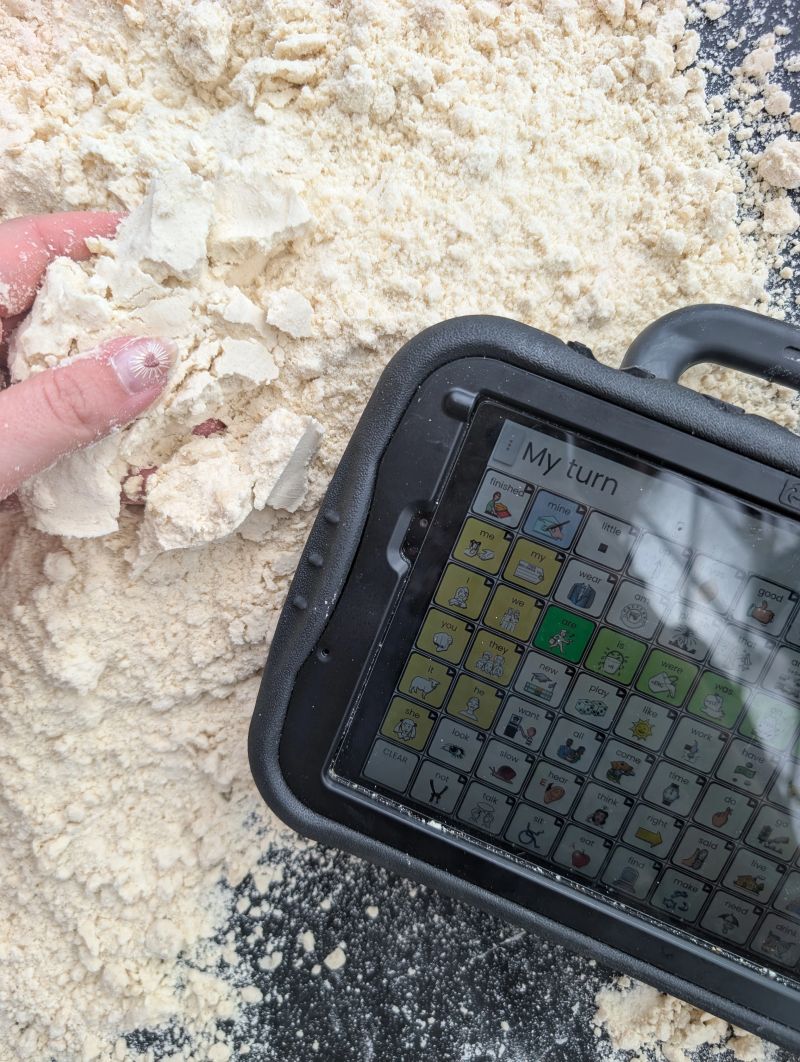
Moon sand or kinetic sand
Ingredients to make moon sand: plain flour and baby oil (or vegetable oil)
Mixing bowl and spoon
Containers, trays, or tuff trays
Scoops, cups, moulds, small toys (e.g., figures, cars)
AAC devices or communication boards
Wipes or cloths for cleaning up
Introduce the moon sand/kinetic sand and make it available as an open, engaging sensory activity.
You might choose to make the moon sand together as part of the activity. A simple recipe is 8 parts flour to 1 part oil (e.g., 8 cups flour to 1 cup oil). Mix slowly until the sand holds its shape when squeezed but still crumbles easily.
This can create additional opportunities for shared interaction and modelling, such as “more,” “stop,” “help,” and “again.”
To encourage connection and meaningful interaction, take a total communication approach, where all communication is valued and welcomed. People communicate in all sorts of ways, such as movement, gesture, facial expression, vocalisation or AAC and recognising these forms of communication is important, as they can give insight into what someone may be thinking, feeling, and wanting to share.
Notice what the learner is doing or interacting with and model language to match it, without any expectation for them to respond. For example,
NEXT SECTION
Use Single Words
Select if you’re proficient at this objective and ready to move onto the next objective