





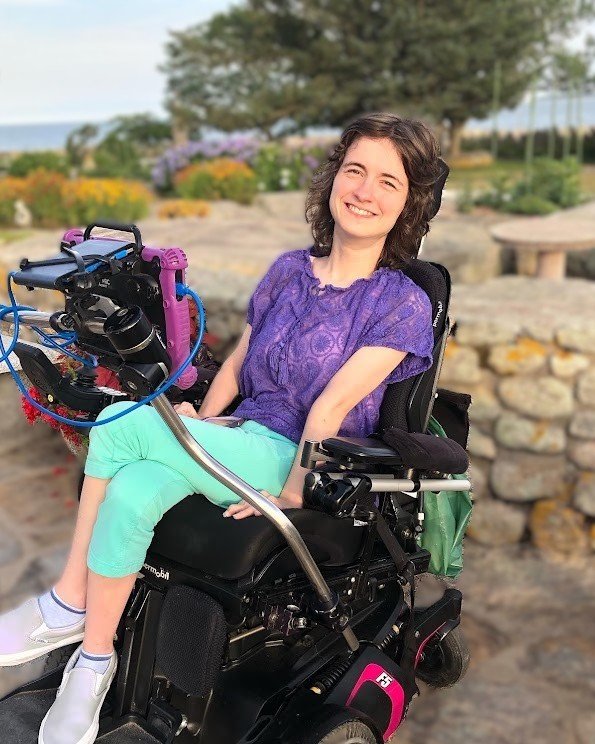
by Margaret Moore, PRC-Saltillo Ambassador and Blogger
AAC, of course, gives nonverbal individuals the ability to speak and advocate for themselves. I have come to understand the magnitude of this fact increasingly as I serve as my own advocate for my medical care and other affairs during my adulthood. Some people stereotype me and assume the use of alternative communication methods indicates that I am incapable of understanding, handling, and expressing concerns and issues. The use and presence of AAC devices should instead be seen as a gateway to my and all users' intelligence and advocacy. Self-advocacy through AAC is possible, and I have developed my own strategies for promoting awareness, understanding, and efficiency when advocating for myself.
I have programmed my Accent 1000 with keys containing information about how my device and access methods work. For example, I have one that says, "It will take me a moment to type a response into my communication device." I also have some explanations prepared about how I use eye-tracking technology and the joystick of my motorized wheelchair to operate my Accent. These basic facts create awareness of what I am doing when it seems like I am just staring at the screen or fiddling with my joystick without moving my chair. It teaches others to wait patiently to see if I have something to say. To supplement this, I often set my device to speak each word as I type spontaneous responses, which alerts people that I am preparing remarks and alleviates awkward silences in my one-on-one conversations.
When virtual and in-person appointments approach, I plan ahead, programming my device with any questions, concerns, and thoughts I know I will want and need to share with providers and peers. By preparing these in advance, I optimize my efficiency, leaving as much time as possible for typing spontaneous responses during the appointments. In other words, preprogramming my known conversation points removes the need to type everything on the spot, and the time gained by doing so can be spent on typing the responses I did not anticipate.
At 29, I am learning that there is no shame in politely and respectfully informing others that I am my own self-advocate and that they need to listen and speak directly to me rather than only addressing my mother, my caregiver who accompanies me to all of my appointments. It is important for AAC users to remember that not everybody has had previous experience with conversing with someone who speaks through alternative communication. Others may not realize that the AAC user can hold conversations just as able-bodied individuals do. Simply explaining that I am able to advocate and attend to what is being said has been instrumental in creating awareness of my capacity to understand and manage my own needs.
I take hope in the increasing frequency that I am seeing providers and peers start to speak directly to me and clearly respect me as a self-advocate. Perhaps, by learning about the strategies I use, fellow AAC users will find the confidence and skills they need for their own self-advocacy. Building awareness of AAC and advocacy requires a lot of effort and planning, but it is always worth it to draw attention to the influential thoughts we share via our augmented voices.
There are no comments yet. Be the first to post!You must be logged in to post.
Communicators In Action